Issued: 7 July
6 min read
Queensland wears the crown as Australia’s most biodiverse state. It’s home to around 80% of the nation’s native bird species, making it a dream destination for birdwatchers and nature lovers alike.
From tropical rainforests to Cape York grasslands, these five unique birds of QLD call the Sunshine State home – and nowhere else on Earth.

The golden-shouldered parrot, found in the southern Cape York Peninsula.
Golden-shouldered parrot (Psephotus chrysopterygius)
If Queensland handed out awards for colourful characters, the golden-shouldered parrot would sit near the top of the list.
Found only on Cape York Peninsula, this striking parrot flashes brilliant turquoise, gold, and orange feathers that stand out against the savanna landscape. The species holds deep cultural significance for the Olkola people, who know it as Alwal.
Unlike most parrots, golden-shouldered parrots raise their young inside termite mounds. After the wet season softens the mound walls, they dig nesting chambers into the structures.
These parrots spend much of their time feeding on grass seeds at ground level. To stay safe, they often forage alongside black-faced woodswallows, which serve as an early warning system for approaching predators.
Sadly, the species now survives in only a small part of its former range, with an estimated 700–1,100 birds remaining in the wild.

A pied monarch, found exclusively in North Queensland’s Wet Tropics.
Pied monarch (Arses kaupi)
Talk about a small bird with a big personality!
The pied monarch measures just 14–15cm long, but its crisp black-and-white plumage and electric-blue eye ring make it impossible to miss in the Wet Tropics of Far North Queensland.
This rainforest specialist builds surprisingly sophisticated nests. Using roots, twigs, and spider silk, it creates delicate hanging baskets suspended among vines.
You’ll usually spot pied monarchs in pairs as they hunt insects through the rainforest understory. Their range sits almost entirely within Queensland’s Wet Tropics region, making them one of the state's true local celebrities.
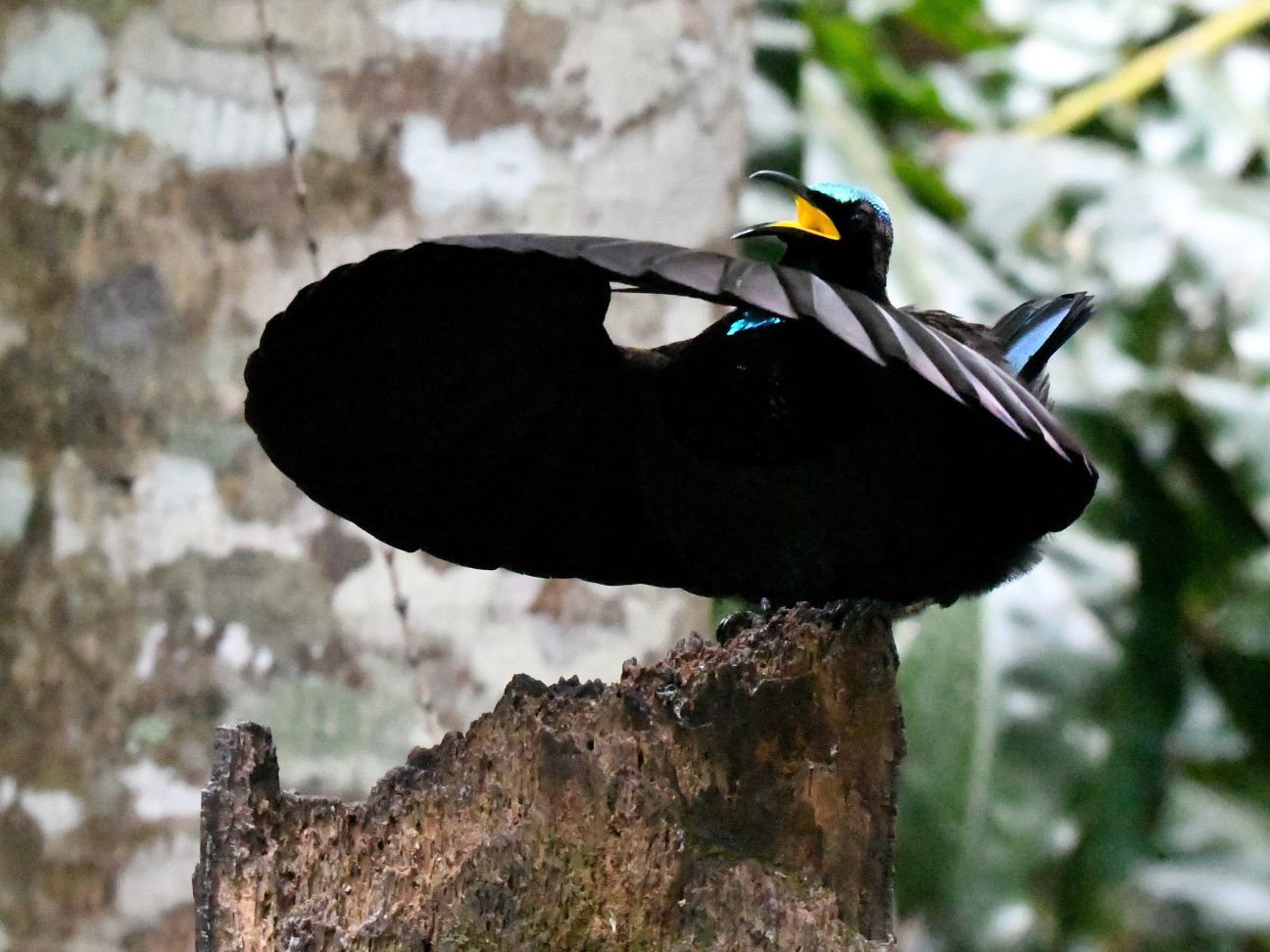
Victoria’s riflebirds are endemic to the Atherton Tableland region in Far North Queensland.
Victoria’s riflebird (Ptiloris victoriae)
Victoria’s riflebird delivers one of Australia's most spectacular courtship displays. This unique bird-of-paradise lives year-round in the Atherton Tablelands and surrounding rainforests of Far North Queensland.
During breeding season, males transform into feathered performers. They spread their wings into a dramatic fan shape, puff out their iridescent turquoise feathers, and sway from side to side in a carefully choreographed dance.
Young males don't wait until adulthood to practise. They start rehearsing their moves well before they begin competing for mates.
For wildlife photographers, spotting a displaying riflebird ranks as one of the ultimate Far North Queensland experiences.

Lovely fairy-wrens are endemic to northeastern Queensland.
Lovely fairy-wren (Malurus amabilis)
The lovely fairy-wren might win the prize for best name and best looks.
This dazzling little bird lives only in north-eastern Queensland, where it thrives along rainforest edges, mangroves, and dense coastal vegetation.
Unlike many of its fairy-wren relatives, this species spends plenty of time higher up in trees. Breeding males sport a pale blue crown, rich blue markings, and a bright white belly that makes them look almost hand-painted.
Lovely fairy-wrens live in close-knit family groups and defend their territories year-round. Despite their beauty, scientists still have plenty to learn about their behaviour and ecology.

Yellow honeyeaters are found all throughout Far North Queensland.
Yellow honeyeater (Stomiopera flava)
The yellow honeyeater proves that simple can be stunning.
This cheerful little bird sports bright yellow plumage from head to tail, without the stripes, spots, or patches seen on many other honeyeaters.
You'll find yellow honeyeaters across many tree-covered habitats in Far North Queensland, from mangroves and woodlands to suburban gardens. They feed on nectar, insects, and fruit, helping pollinate native plants along the way.
Listen for their sharp whistling calls and look up – they spend much of their day darting through the canopy in search of their next feed.
Protecting Queensland's birds and biodiversity
The native birds of QLD are truly incredible, but sadly, they face an uncertain future. Ongoing habitat clearance poses a major threat to all bird species. This is why we’ve pledged $262.5 million over the next four years to expand the state’s network of protected areas.
For more information on what we are doing, take a look at Queensland’s Protected Area Strategy 2020–2030 and Queensland's Biodiversity Conservation Strategy.
What can you do?
Want to help protect Australia's incredible birdlife? Join the Aussie Bird Count, one of the country's biggest citizen science events.
Taking part is easy – spend 20 minutes counting the birds you see around you, then submit your sightings through the Aussie Bird Count app or website.
Keen to keep birdwatching after the event? You can record sightings year-round through Birdata surveys and contribute valuable information to bird conservation across Australia.
Every observation makes a difference. Researchers and conservationists use Birdata records to monitor bird populations, identify early warning signs for threatened species, support scientific studies, and help inform government planning and conservation decisions.
Newsletter
Get involved and stay informed with our handpicked environmental news, tips, and stories sent directly to your inbox.