Issued: 20 April
8 min read
When you think about the stars of the Great Barrier Reef, it’s easy to default to the classics – after all, who doesn’t love a dugong, turtle, or even a shark? While the Reef’s animals deservedly get a lot of attention, we thought it was high time to shine a spotlight on some of its equally fascinating flora.
There are 2,195 species of native plants in the Great Barrier Reef – that’s over a quarter of Queensland’s species! These are spread over diverse habitats including wetlands, reef, seagrass, mangroves, and both continental and coral islands. In our explainer of the Reef’s ecosystem, we go into plenty of detail about how all the living organisms in the space work together – and while all the flora and fauna play a critical role in keeping the Reef alive and healthy, the real heroes are sometimes a little more under the radar than you expect.
Want to learn more about the Reef’s weird, wonderful, and essential plant life? You’ve come to the right place.
Seagrass
Seagrass meadows are one of the most fundamental pieces of flora in the Great Barrier Reef ecosystem – we need them to maintain the biodiversity, stability, and productivity of the Reef. There are around 15 species, including notable types like Zostera muelleri (Eelgrass) and Thalassia hemprichii (Turtle grass). These meadows thrive in shallow coastal waters, providing essential feeding grounds for herbivores like dugongs and green sea turtles, and serving as nurseries for different marine species.
Seagrass roots also stabilise the seabed, reducing erosion and improving water clarity, which is vital for coral health. Additionally, seagrasses play a significant role in carbon sequestration, helping mitigate climate change. What an all-rounder of a plant!

Seagrass is one of the plants that helps stabilise the seabed – not to mention it’s a food source and nursery for different Reef animals.
Mangroves
Mangroves are another star of the Great Barrier Reef ecosystem, with species like Rhizophora stylosa (Red mangrove) and Avicennia marina (Grey mangrove) being especially important. These trees thrive in intertidal zones, where their extensive root systems stabilise shorelines and reduce erosion.
Mangroves provide critical habitats and nursery grounds for a host of different marine life, including fish, crabs, and birds. They also enhance water quality by trapping sediments and filtering pollutants. Like seagrass, mangroves play a crucial role in carbon sequestration, storing large amounts of carbon in their biomass and sediments.

The sturdy roots of mangroves are the glue that holds reef shorelines together.
Red algae (Rhodophyta)
Red algae, particularly coralline algae, have a unique role in the Reef ecosystem. They are crucial in cementing coral fragments and other materials together, which keeps the Reef's structural integrity in check. Coralline algae produce calcium carbonate, contributing to the Reef's growth and maintenance.
They also provide a hard substrate for coral larvae to settle on, which sets the scene for coral reproduction and growth. Additionally, some red algae are involved in nutrient cycling and offer habitats and protection for small marine organisms. Basically, red algae are something of an MVP in the Reef ecosystem.
The Reef’s red algae aren’t just functional – here are some of the prettiest specimens!

Red algae is vital for the Reef’s growth and maintenance.
Peyssonnelia sp.1
Peyssonnelia sp.1 is a type of red algae that forms thin, crust-like sheets over hard substrates. In the Great Barrier Reef, this alga contributes to reef stability by binding loose sediments and providing a surface for other marine organisms to settle and grow – a win for the Reef's structural complexity and biodiversity.

Peyssonnelia sp.1 is a major player in the Reef’s structural integrity.
Asparagopsis taxiformis
Asparagopsis taxiformis is a feathery red algae known for its vibrant pinkish-red colouration and bioactive compounds. This alga is a major player in the Great Barrier Reef ecosystem – it produces antibacterial substances that help maintain water quality and support marine health, while also providing habitat for small invertebrates.
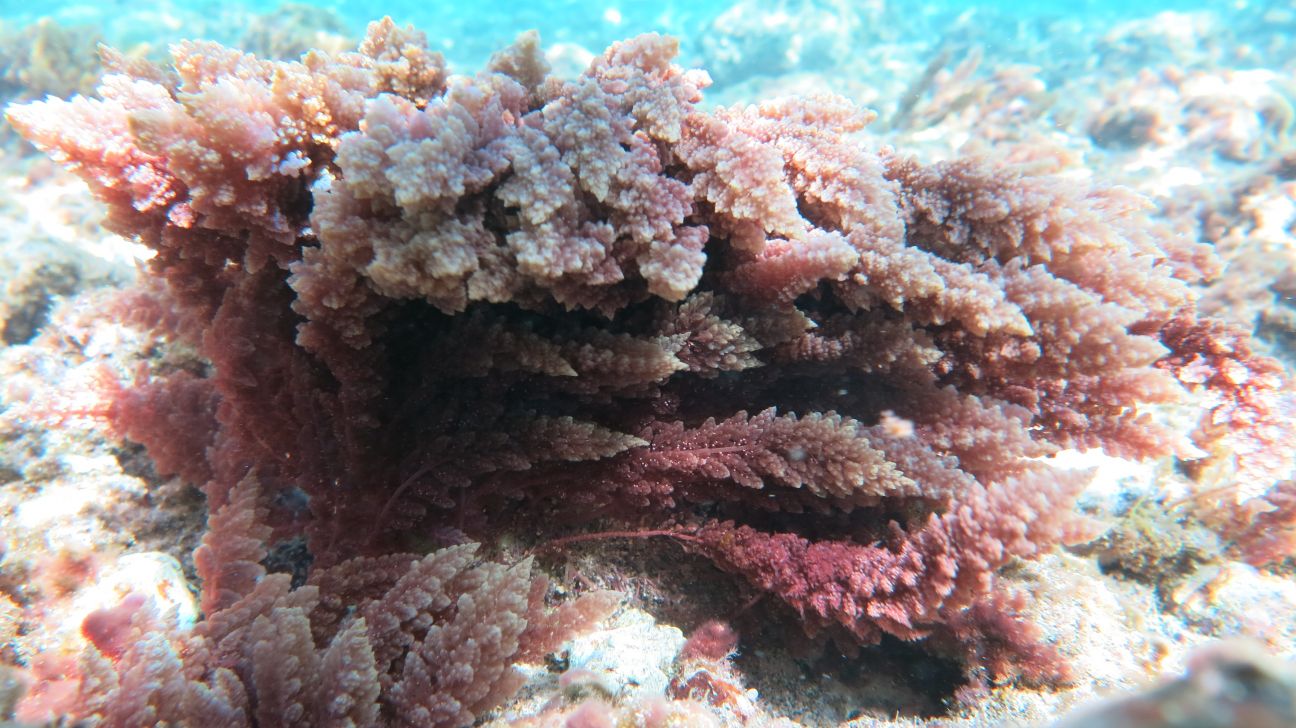
Light as a feather – the Asparagopsis taxiformis has an ethereal appearance.
Coralline algae (Corallinaceae)
Is someone blushing? Coralline algae are heavily calcified red algae that can take on a pink or red hue thanks to their calcium carbonate content. They are crucial to the Great Barrier Reef as they help build and cement the reef structure, providing a stable substrate for coral larvae to settle and grow. This is a major contributor to Reef resilience and stability.
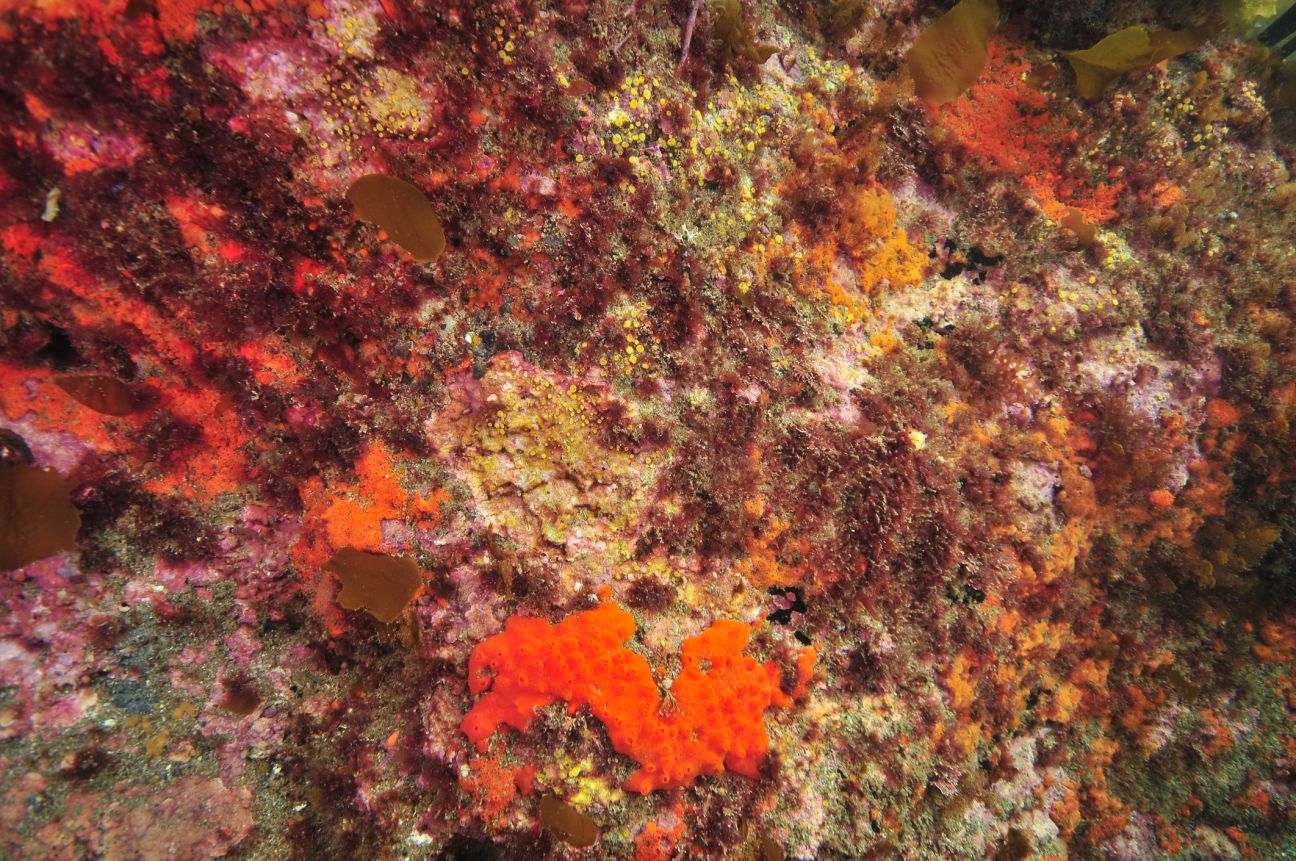
It’s hard to miss the bright red colouring of coralline algae.
Green algae (Chlorophyta)
Green algae are the primary producers of the Reef, using photosynthesis to convert sunlight into energy and producing oxygen as a byproduct. They form an essential part of the diet for the Reef’s marine animals, including fish and invertebrates. Green algae also contribute to the Reef's structure by depositing calcium carbonate, which aids in coral reef formation and stabilisation.
Below, we spotlight some of the most beautiful and weird types of green algae that call the Reef home.
Mermaid’s wineglass (Acetabularia spp.)
Fun name for a fascinating plant! The mermaid’s wineglass is a distinctive green algae famous for its umbrella-like structure and fairytale appearance. In the Reef, this alga provides microhabitats for small marine organisms – very appropriate for its shrunken scale.
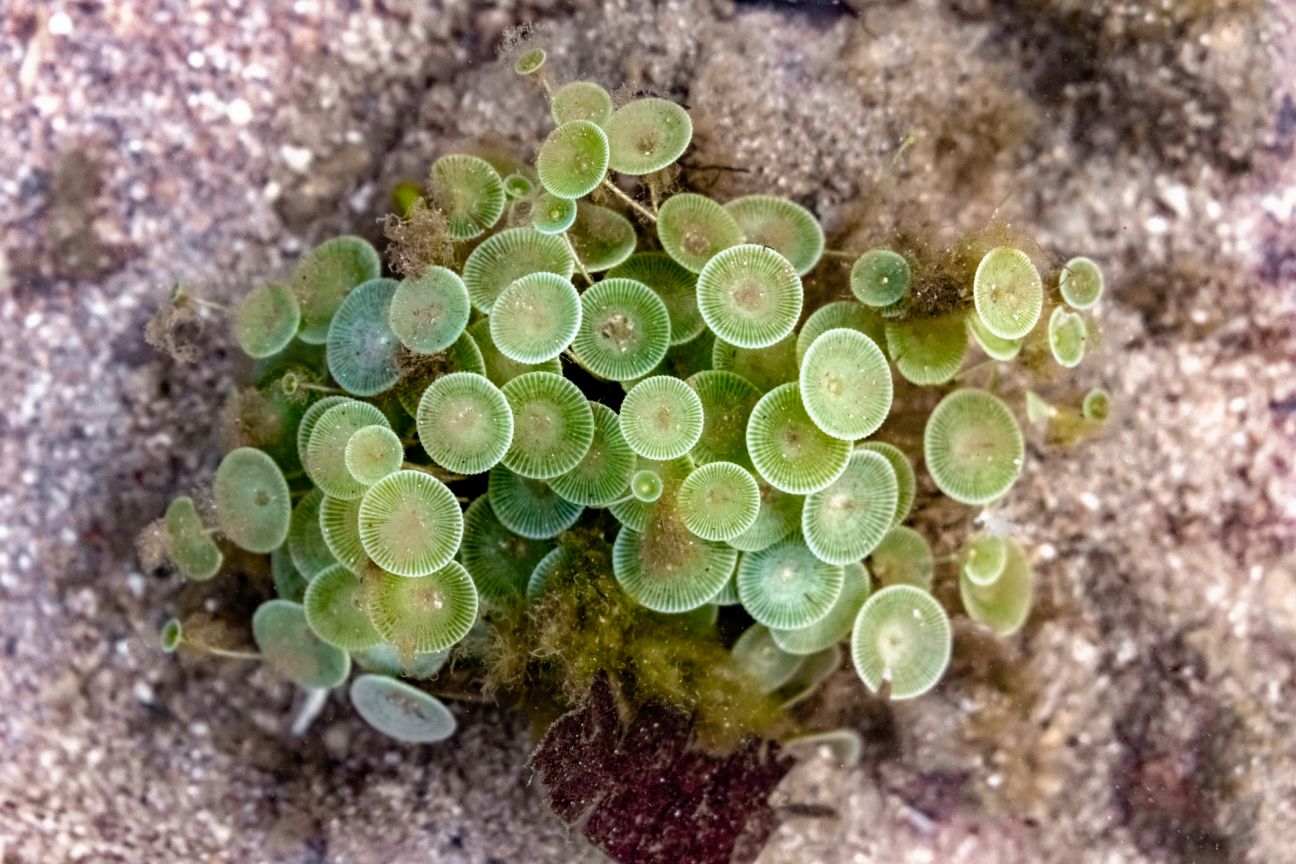
Mermaid’s wineglass is a charming (and helpful) addition to the Reef.
Sea grapes (Caulerpa racemosa)
Sea grapes look exactly how their name suggests – they are easily recognisable clusters of small, spherical fronds. This alga forms dense mats on the Reef, providing shelter and food for a host of marine life, while also contributing to sediment stabilisation and the overall health of the Reef habitat.
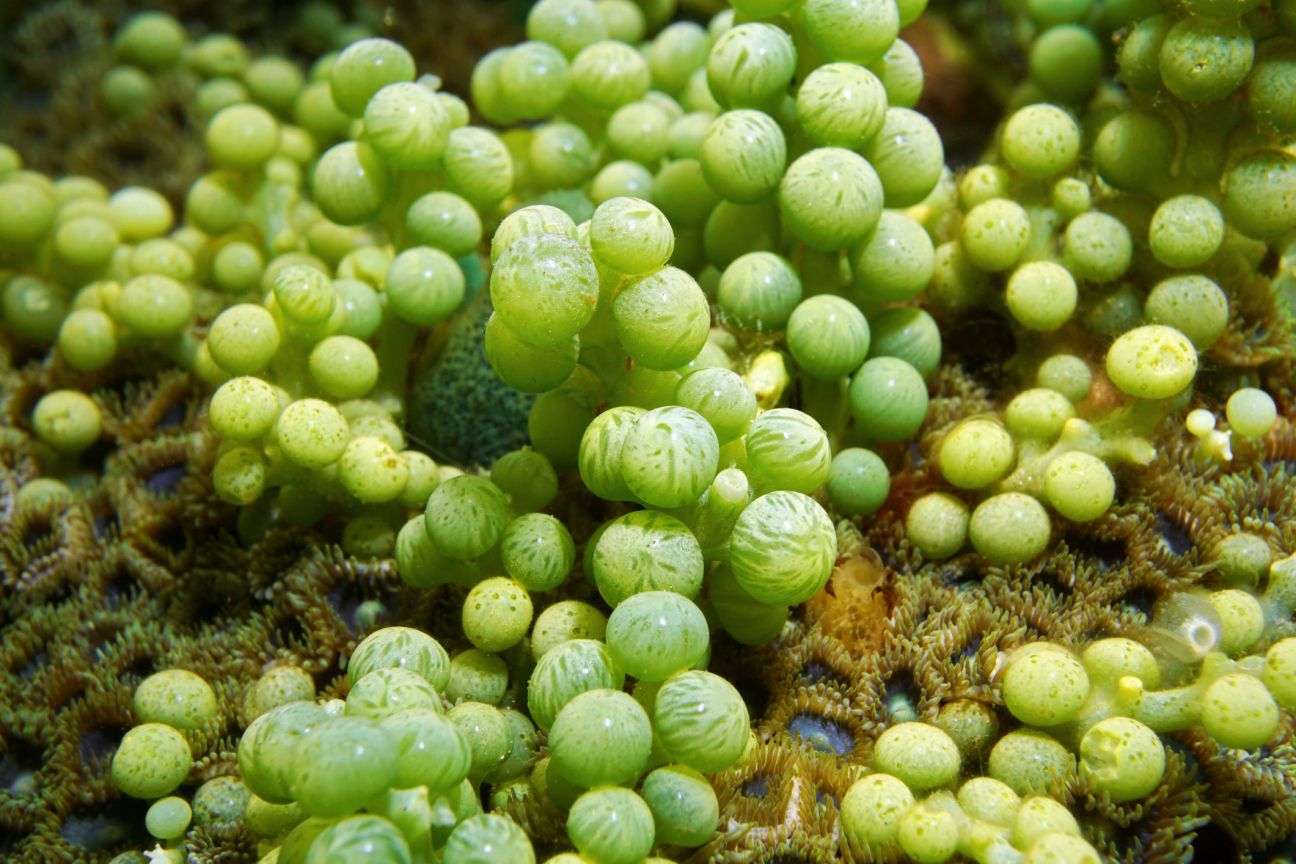
Sea grapes look very similar to their above-ground counterparts.
Sea lettuce (Ulva lactuca)
When you see the broad, bright green, leaf-like structures of sea lettuce, you could be forgiven for thinking you’re at a Sizzler buffet – which is kind of true for the Reef’s herbivorous marine mammals. This vibrant alga's presence is a giveaway that you’re in nutrient-rich waters, as it plays a significant role in the nutrient cycling within the Reef ecosystem.

The bright green leaves of sea lettuce are super visible underwater.
Bubble algae (Valonia ventricosa)
Valonia ventricosa, commonly known as bubble algae or sailor’s eyeballs (yuck!), is aptly named for its large, spherical cells. In the Great Barrier Reef, this alga adds structural diversity, providing microhabitats for small marine organisms – not to mention it looks cool.
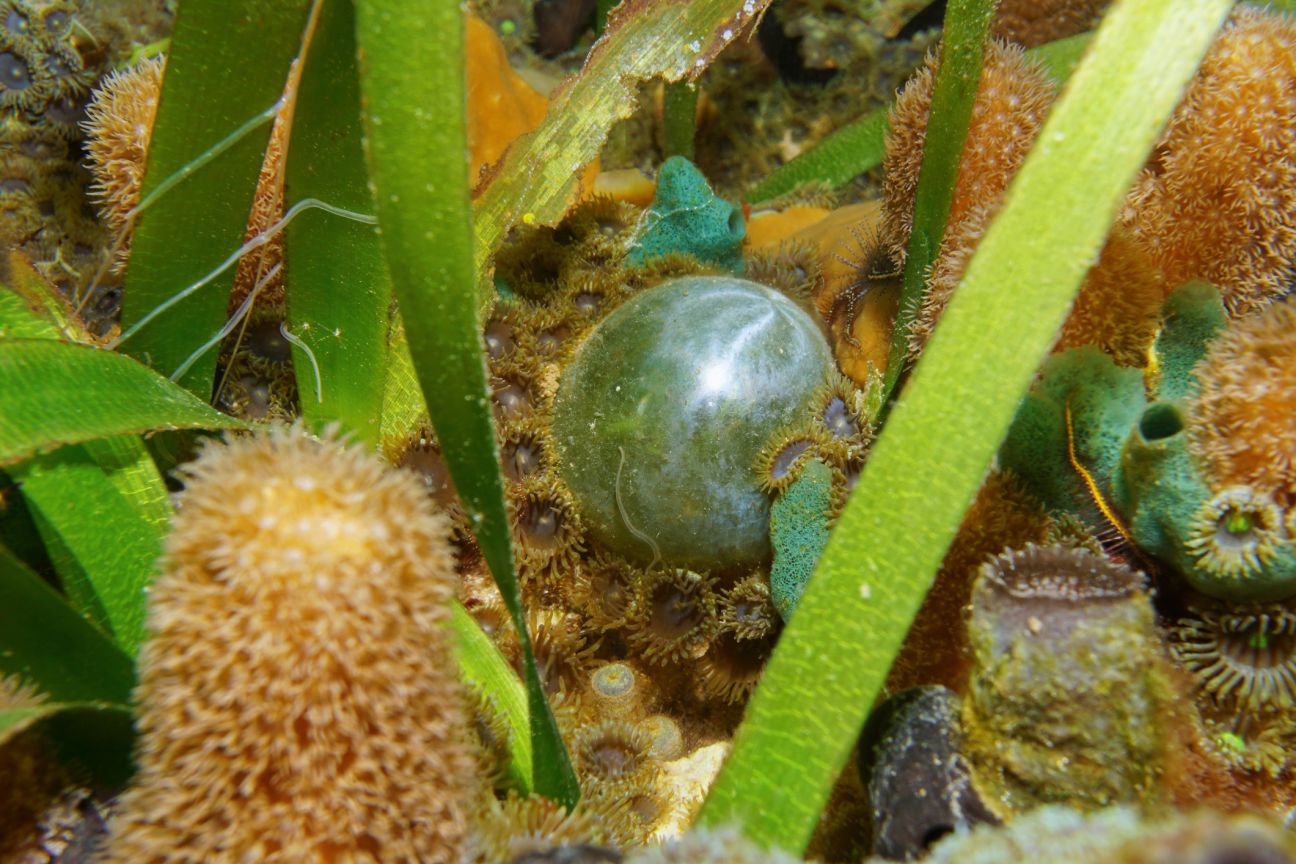
Bubble algae have the charming nickname “sailor’s eyeballs” – thanks to its bulbous nature.
Halimeda
Halimeda, a key player in the Great Barrier Reef's history, has created massive deposits of carbonate sediment through its growth. These deposits, called bioherms, are the largest of their kind in the world and provide a record of the Reef's past, including climate changes and sea-level fluctuations that occurred before corals became dominant.
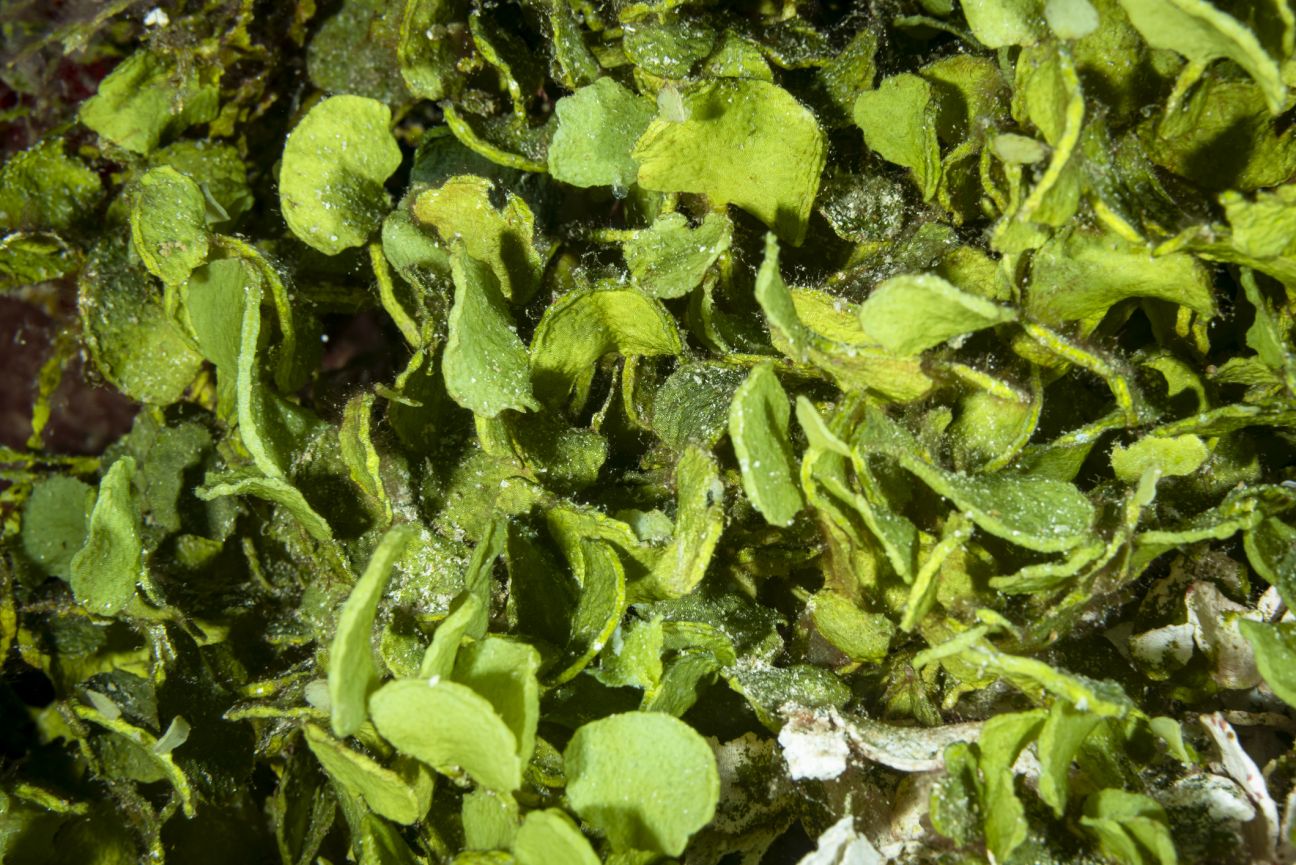
Halimeda provides clues to the Reef’s past.
Brown algae
Brown algae play a vital role in the Great Barrier Reef ecosystem. They are primarily known for their ability to absorb nutrients from the water, helping to maintain the Reef's water quality. Brown algae also serve as a food source for plenty of marine organisms, including herbivorous fish and invertebrates.
These particular taxa of alga can also help stabilise the reef substrate, preventing erosion and promoting reef growth. Some species of brown algae can even create new habitats by forming dense mats or structures that provide shelter for other living creatures.
Here are a couple of our favourite types of brown algae that live in the Reef.

Brown algae are nutrient powerhouses of the Reef.
Sargassum
As something of a drifting ecosystem, Sargassum is often found floating in large mats in the open ocean. These mats create unique ecosystems that support a diverse range of marine life – small fish, invertebrates, and even sea turtles often seek refuge here. They shield their inhabitants from predators and offer access to food sources.
Sargassum also plays a role in nutrient cycling. As it decomposes, it releases nutrients into the water, which can benefit marine plants and algae. Additionally, sargassum can help to absorb carbon dioxide from the atmosphere, contributing to efforts to mitigate climate change. What an all-rounder!

Sargassum floats around the ocean in large masses, making a mobile home for fish.
Lobophora
Lobophora plays a significant role in the Great Barrier Reef ecosystem. It is a common sight on the Reef, often forming dense mats or patches. One of its primary functions is to provide habitat for marine organisms. Small fish, invertebrates, and other algae often take up residence within its dense fronds. This helps to increase biodiversity and maintain a healthy reef environment. While Lobophora can sometimes compete with corals for space, it is still a beneficial member of the Reef community.
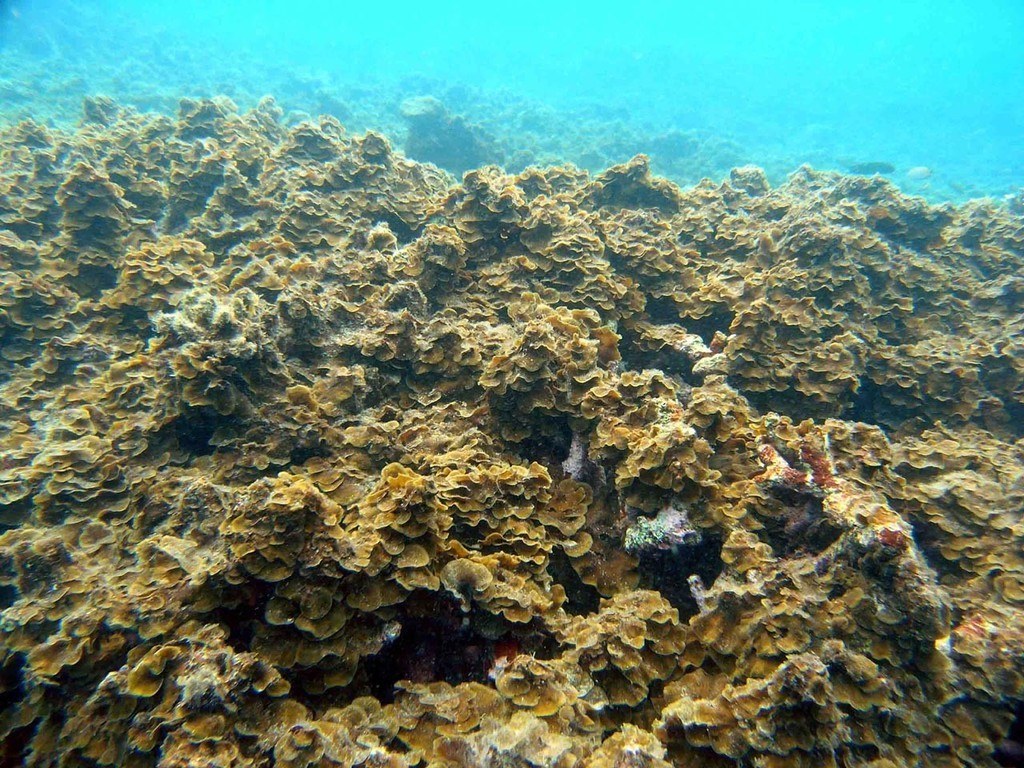
Lobophora forms thick mats, as seen here.
ARC Centre of Excellence Coral Reef StudiesTurf algae
Turf algae is a community of different kinds of algae that grow together on coral reefs. This mix of red, brown, and green algae can form thick mats that trap dirt and sediment.
Following cyclones, bleaching events, floods, and deteriorating water quality, dead coral and coral rubble on coral reefs are becoming rapidly overgrown by turf algae “empires”. Over time, more turf algae are replacing the coral on reefs, which can harm the reef ecosystem and cause more sediment to build up.
Protecting the Great Barrier Reef
Both the plants and animals of the Great Barrier Reef need to be kept safe from imminent threats. Protecting the Great Barrier Reef is a collaborative effort involving governments, Traditional Owners, landholders, conservation groups, industries, and community members. The Queensland Government has committed over $1 billion since 2015, working with individuals and organisations to "walk the talk” and take impactful action. We have loads of information about what strategies are in place to protect the Reef, as well as how you can get involved.
This blog has been fact-checked by Maria Zann (Senior Project Officer – Wetlands Team, Environment and Heritage Policy Programs) from the Department of the Environment, Tourism, Science and Innovation. Maria is a marine spatial ecologist specialising in benthic marine habitat classification, mapping and inventory.
Newsletter
Get involved and stay informed with our handpicked environmental news, tips, and stories sent directly to your inbox.