Issued: 5 November 2024
5 minutes read
K'gari is a stunning natural paradise and a must-visit bucket list destination, but it's important to remember that it's also home to dingoes. While these fascinating creatures are a vital part of the island's ecosystem, it's crucial to take precautions to ensure your safety during your visit. One essential tool for your K'gari adventure is a dingo safety stick – but what are they, how do you use them, and where can you get one? Before you head to the island, here’s everything you need to know about this important safety precaution.
What is a dingo stick?
A dingo safety stick is simply a long, sturdy object, such as a fishing rod, hiking pole, or PVC pipe, that can be used to deter dingoes from approaching too closely. By carrying a dingo stick, you can maintain distance between yourself and the animal, reducing the risk of unwanted encounters. They may also assist you in remaining calm if a dingo does approach you, allowing you to move away slowly and without causing an interaction to escalate.
Why do we need dingo safety sticks?
Over the years, rangers on K’gari have observed that dingoes are less likely to approach people carrying large sticks or poles – think of the imposing silhouette a fisher would create when holding a rod! Dingoes instinctively recognise these objects as potential threats. By carrying a dingo stick, you're sending a clear message to the dingo that you're not to be approached.
 Open larger image
No sudden movements – dingo safety sticks should be used to create distance.
How do you use a dingo stick?
There are some crucial dos and don’ts for using a dingo safety stick properly. Use it correctly and you can reduce your chances of a dangerous encounter with a dingo – but use it improperly and you may end up making the situation more volatile.
What to do
Carry a dingo stick at all times when walking outside of fenced areas: Being prepared for a potential dingo encounter is crucial, especially if you're alone or with children or teenagers.
Keep the stick extended between yourself and the dingo: If you are approached by a dingo, remain calm and keep your eyes on it. If the dingo continues to approach, use the dingo safety stick to create distance between yourself and the animal.
Back away slowly and calmly: If a dingo becomes aggressive, don’t try to be a hero – back away to safety and call for help.
Use the stick to make noise on the sand: Hitting the stick on the sand loudly may discourage dingoes from coming closer to you.
Get everyone in your visiting party on board: Make sure everyone travelling with you knows what a dingo safety stick is, as well as how to use it properly.
What NOT to do
DO NOT wave the stick around, chase the dingo with the stick, or use the stick to flick sand in the dingo’s face: This can make dingoes more agitated.
DO NOT hit or strike the dingo with sticks or other weapons: Fines of up to $27,538 are in place for those who disturb or harm dingoes on K’gari. Remember – part of visiting the island is coexisting with dingoes while you’re there.
DO NOT approach or feed dingoes: Dingoes are not like domestic dogs – they are wild animals and should be treated as such. Don’t be fooled by their size – dingoes are naturally lean and do not need your food.
DO NOT leave food or rubbish lying around: This can increase the likelihood of an unwanted encounter with a hungry (or curious) dingo.
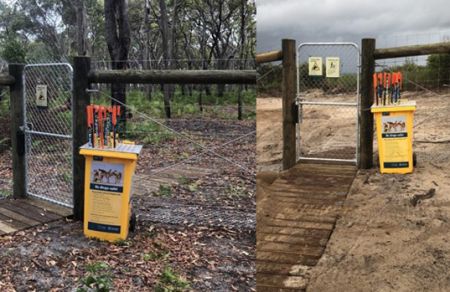
Dingo safety sticks can be found in yellow bins around K’gari.
Where to get a dingo stick
Now that you know how to properly wield a dingo safety stick – where can you actually find one? There are PVC dingo safety sticks that you can pick up from dedicated bins at key fenced areas around K’gari (like the ones pictured above). If you borrow a supplied stick, please be considerate and return it before you head home – this way, future visitors don’t miss out.
If you’re travelling with kids or just like to get a bit crafty yourself, why not create your own dingo sticks before your holiday? It’s a fun, easy project that can double as a time to explain some basic dingo-safe tips to your travel buddies.
Got to the island and still don’t have a dingo safety stick? No problem! Any stick or pole will do the job – folks have been known to use fishing rods, hiking poles, or long sticks found on the ground.
Be Dingo Safe
Follow these guidelines to ensure your safety and the safety of our dingoes on K’gari.
Welcome to K’gari, the largest sand island in the world and the best place to see dingoes in the wild. This dingo population is likely to become one of the most genetically pure populations and worthy of our best conservation efforts.
However, some K’gari dingoes are habituated to people and may approach you, so it's important that you follow these guidelines to ensure your safety and the safety of our dingoes.
Never feed dingoes. Secure all food, rubbish in a sealed container or vehicle and never store food in your tent.
When dingoes obtain food from humans, either intentionally or accidentally, it can lead to them losing their natural fear of people.
And this can lead them to developing threatening behaviour, which can ultimately result in their humane destruction, something we would want to avoid at all costs.
Always stay within arm's reach of children, even teenagers. And even though dingoes might look like a dog, they are wild animals and opportunistic hunters.
Unattended children are at high risk of being involved in an aggressive dingo behaviour.
Do not run. Running or jogging can trigger a negative dingo interaction.
Always walk in groups and carry a stick. Dingoes are more wary of people carrying sticks and many people can remain calm if threatened by a dingo. When at Boorangoora or any other lake across the island, there are a few dingo safety rules that you'll need to follow.
Don't take food or drink to lakeshores and please use fenced picnic areas.
Dingoes are different to domestic dogs, so please read the Dingo Safety Brochure to ensure you, as the public, know how to identify different behaviours.
We hope you have a great time visiting K’gari. By following those simple guidelines, it will keep you and the dingoes safe, so all can enjoy this incredible island.
Your key to a safer K’gari experience
Having a dingo safety stick handy (and knowing how to use it) is a simple but effective way to help minimise your risk of an aggressive dingo encounter on K’gari. By following basic dingo-safe guidelines and using a dingo stick responsibly, you can help ensure a safe and enjoyable experience for everyone in your crew.
Newsletter
Get involved and stay informed with our handpicked environmental news, tips, and stories sent directly to your inbox.