Issued: 9 April
8 mins read
When it comes to ecological restoration projects, practicality often takes precedence over aesthetics – but a groundbreaking installation on Woppa (Great Keppel Island) is proving that even the most unexpected elements can be transformed into a work of art.
An oyster reef installation at Balban Dara Guya (Leekes Creek) is doubling up as a large-scale First Nations artwork, making it the first of its kind in Australia. Take a deep dive with us as we explain the full context of the restoration, discuss who is involved, and explore the significance of science supporting Country.
The project at a glance
While this specific installation is impressive in itself, it forms part of a broader wetland restoration project aimed at healing vegetation, waterways, and sea Country. The Restoration for Balban Dara Guya and Putney Beach Project is a collaborative initiative to restore 77 hectares of mangroves, salt marsh, and shellfish reef ecosystems on Woppa.
Commencing in June 2024, this mammoth project is a collaborative effort led by the Woppaburra TUMRA Aboriginal Corporation (WTAC) in partnership with Ecosure, an environmental consultancy. OzFish and CQUniversity are also on board to provide additional support.
The oyster reef installation site at Leeke’s Creek was chosen for its cultural significance to the Woppaburra people. The Woppaburra people invited Yuwi, Gidarjil, and Darumbal Indigenous ranger groups to be part of the project, also teaming up with OzFish and Ecosure staff to complete the practical elements of the installation.
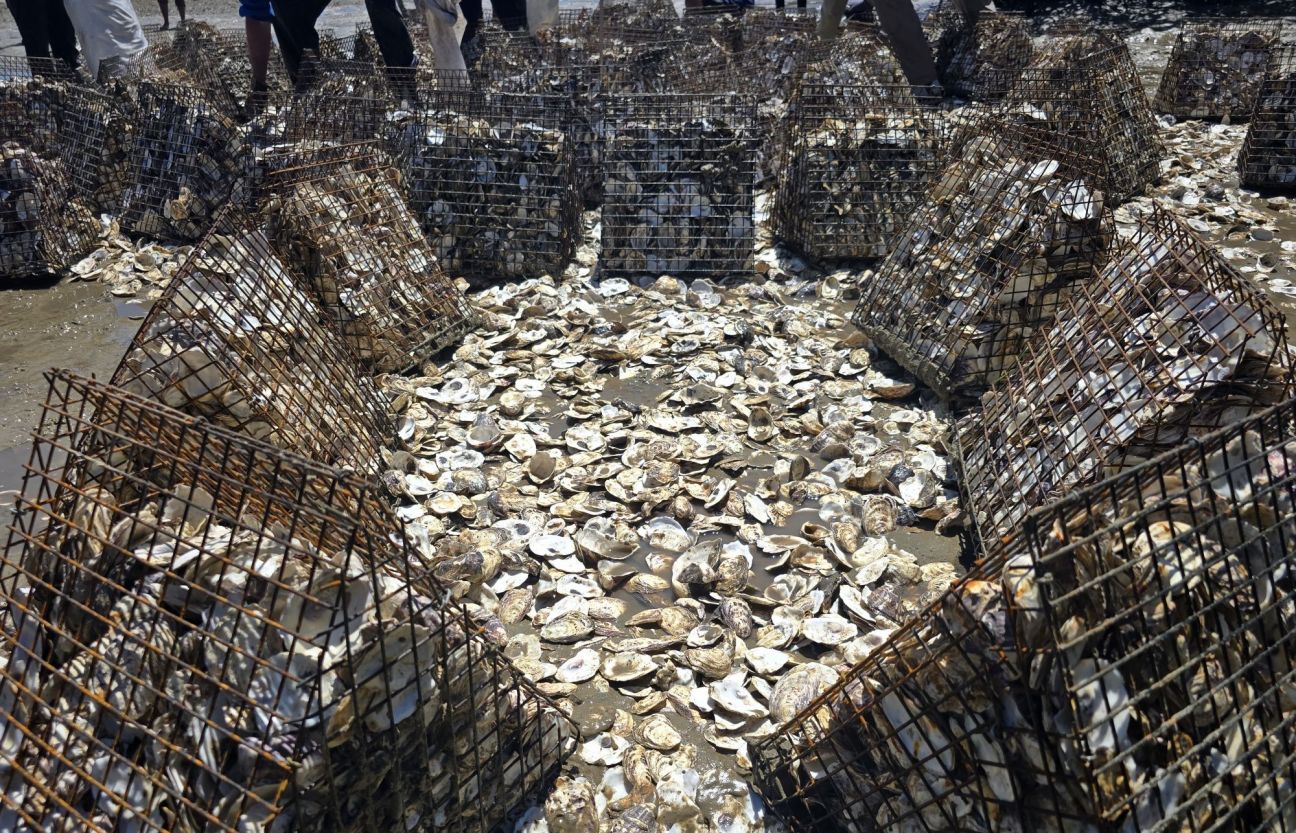
Expended Waku (oysters) are an ideal material for the project – they become the foundation of a new reef which attracts oyster spawn to germinate and grow.
Tshinta BarneyWhy oysters?
Woppaburra people have been sustainably harvesting oysters (traditionally called waku) from Leeke’s Creek for millennia. Woppaburra Operations Manager, Dr. Sonny Van Issum stresses the deep cultural significance of these molluscs, explaining that they are not just a food source, but are also used in jewellery making and men's ceremonies.
“Over the past 150 years, shellfish reefs were heavily degraded due to overharvesting. This project is about bringing them back to be used as a food source, rebuild traditional jewellery making, and re-establish men’s ceremony,” Elder, Dr Van Issum elaborates.
Baseline assessments at Balban Dara Guya identified six shellfish species, including healthy populations of longbums (Telescopium telescopium), an important traditional food source.
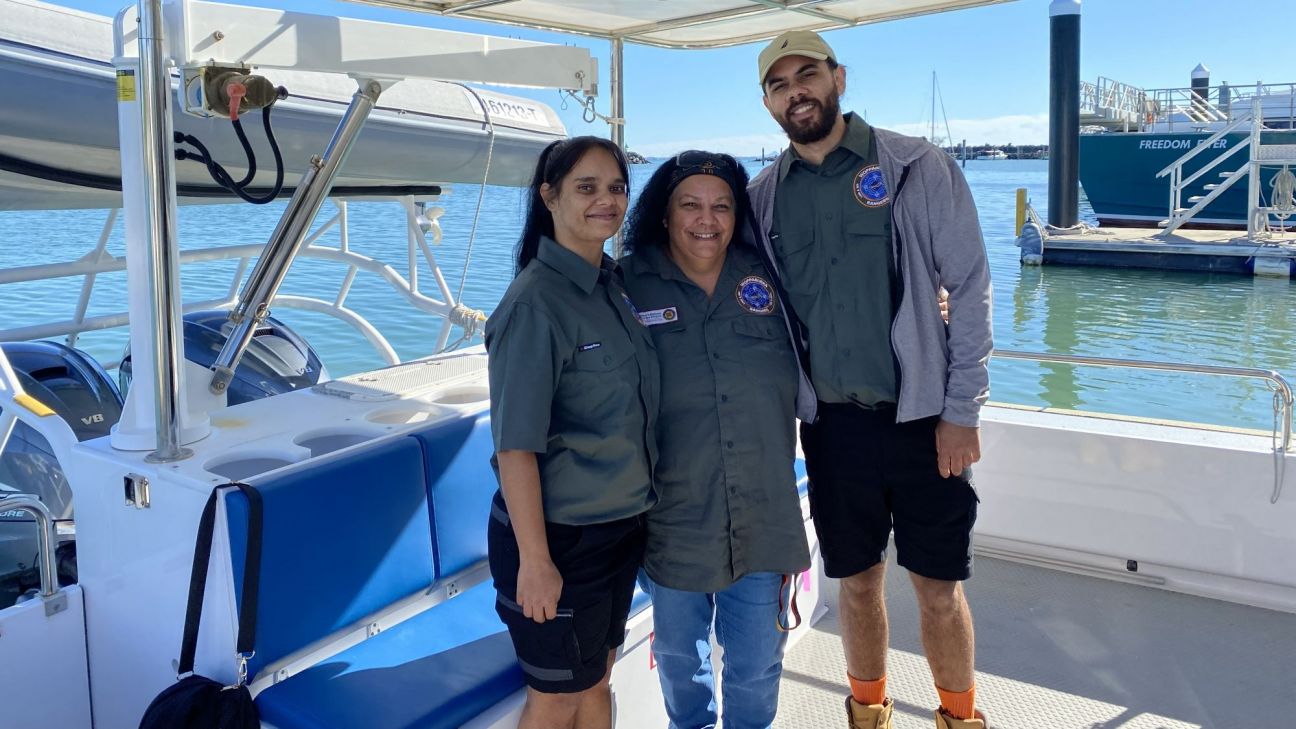
Rangers Tshinta (L) and Darcy (R) with artist Debra Witteman, onboard the QPWS barge travelling to Country.
Sonny Van IssumThe meaning behind the artwork
Woppaburra artist Debra Witteman inscribed the cultural meanings behind the artwork. The design reflects traditional gathering places and the movement of people across Woppaburra Land and sea Country.
“The circles represent where our people would meet and the lines show our people traversing the waters between our islands, connecting with one another and with Country,” Ms. Witteman explains.
From a practical standpoint, Ms. Witteman’s design was created using a fascinating combination of modern technology, ancient cultural practice, and a deep consideration for Country.
Drone imagery and surrounding mangrove systems helped inform her design, ensuring she was working with the flow of the existing natural structure of the space. The placement of the reef structures struck the perfect balance between cultural storytelling and ecological restoration.
“For this work to happen on my own people’s Country, at a place our people have gathered for generations, is especially meaningful.”
– Debra Witteman, Woppaburra artist
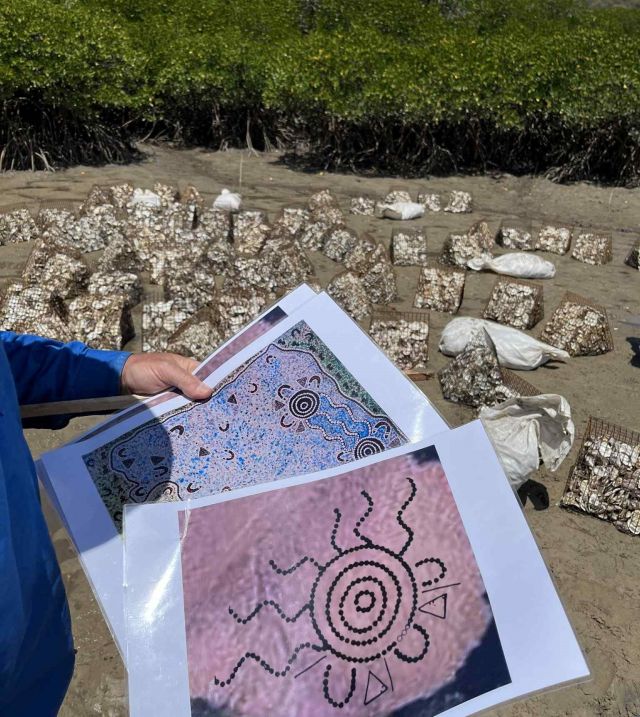
From concept to completion – sketches that informed the final design of the reef installation artwork.
Sheridan LawtonScience supporting Country
Indigenous land and sea management practices are among the oldest in the world – Traditional Owners have relied on ancient knowledge passed down through generations to care for Country.
The foundation of the new shellfish reefs on Woppa is built on an innovative and sustainable approach, blending recycled materials with ecological expertise. Up to 100 Robust Oyster Baskets (ROBs), crafted from recycled oyster shells and metal cages, were carefully installed to create the base for these vital ecosystems.
“These reefs are more than just structures,” explains OzFish’s Robbie Porter. “Shellfish reefs provide food and homes to fish and other creatures. They also improve water quality, can protect coastlines from erosion, and reduce the effects of climate change.”
The installation of these reefs is a testament to the growing recognition of oyster reef restoration as a key strategy for waterway rehabilitation across Australia. Once established, these reefs are expected to transform the surrounding environment, improving water quality, creating habitats for fish and invertebrates, and supporting the overall health of the wetlands.
This work is a powerful example of how science and sustainability can come together to heal Country. By repurposing natural materials like oyster shells and combining them with innovative design, the project is not only addressing environmental challenges but also creating a legacy of ecological resilience.
The careful placement of the ROBs ensures they integrate seamlessly with the natural environment, fostering a balance between human ingenuity and the ecosystem’s needs.
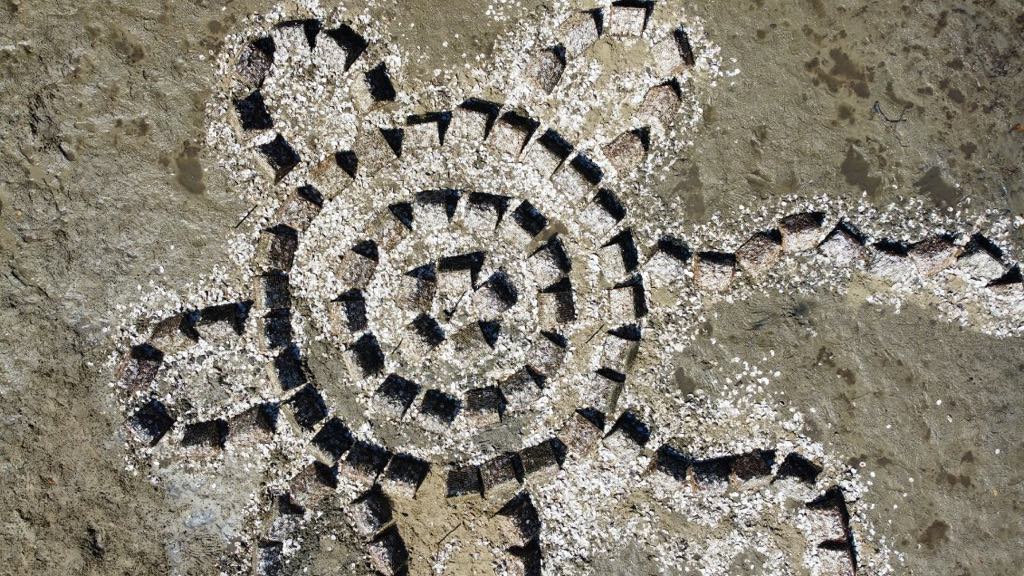
Before the tide – how the oyster baskets look from above before any water overlay.
Sheridan LawtonLooking to the future
The restoration of Woppaburra Land and sea Country is about much more than just repairing ecosystems – it’s a profound act of healing and hope. Angela Barney-Leitch, Chairperson of the Woppaburra TUMRA Aboriginal Corporation, emphasised the importance of this partnership in honouring the Woppaburra people’s role as custodians of the land and ensuring the long-term health and vibrancy of these waters for future generations.
This initiative not only restores vital habitats but also strengthens cultural resilience, creates employment opportunities, and fosters community leadership to support the ongoing care of Woppa.
“This partnership is about healing and hope – it’s about respecting our responsibilities as custodians and ensuring these waters remain healthy and vibrant for generations to come.”
– Angela Barney-Leitch
Diane Lanyon, Director of Strategic Partnerships at Ecosure, highlighted the deeper significance of the project, describing it as a journey of reconnection. By integrating Traditional Ecological Knowledge with modern scientific methods, the collaboration is paving the way for the long-term healing of both Country and People.
Together, the partners are building a legacy of sustainability and cultural preservation, ensuring that Woppaburra Land and Sea Country thrives now and in the future.
Fostering First Nations knowledge
Caring for Land and sea Country is made possible with funding and support for Indigenous land and sea rangers. The Woppaburra, Yuwi, Gidarjil, and Darumbal Indigenous ranger groups involved in this project have all received funding and training through the Queensland Government’s Indigenous Land and Sea Ranger Program. This resource has been designed to support self-determination by fostering co-stewardship and meaningful partnerships – and the wetland restoration project on Woppa is a prime example of the program's success.
Local community organisations employ QILS rangers to conserve the environment, natural resources, and cultural heritage by integrating traditional knowledge and contemporary scientific practices. Each of the ranger groups involved comprises highly skilled land managers who share their expertise, knowledge, and experience with each other, the project partners, and the local communities at Woppa.
This collaborative approach reflects traditional practices of caring for Country, giving First Nations stewards the opportunity to pool their local knowledge for maximum environmental protection.
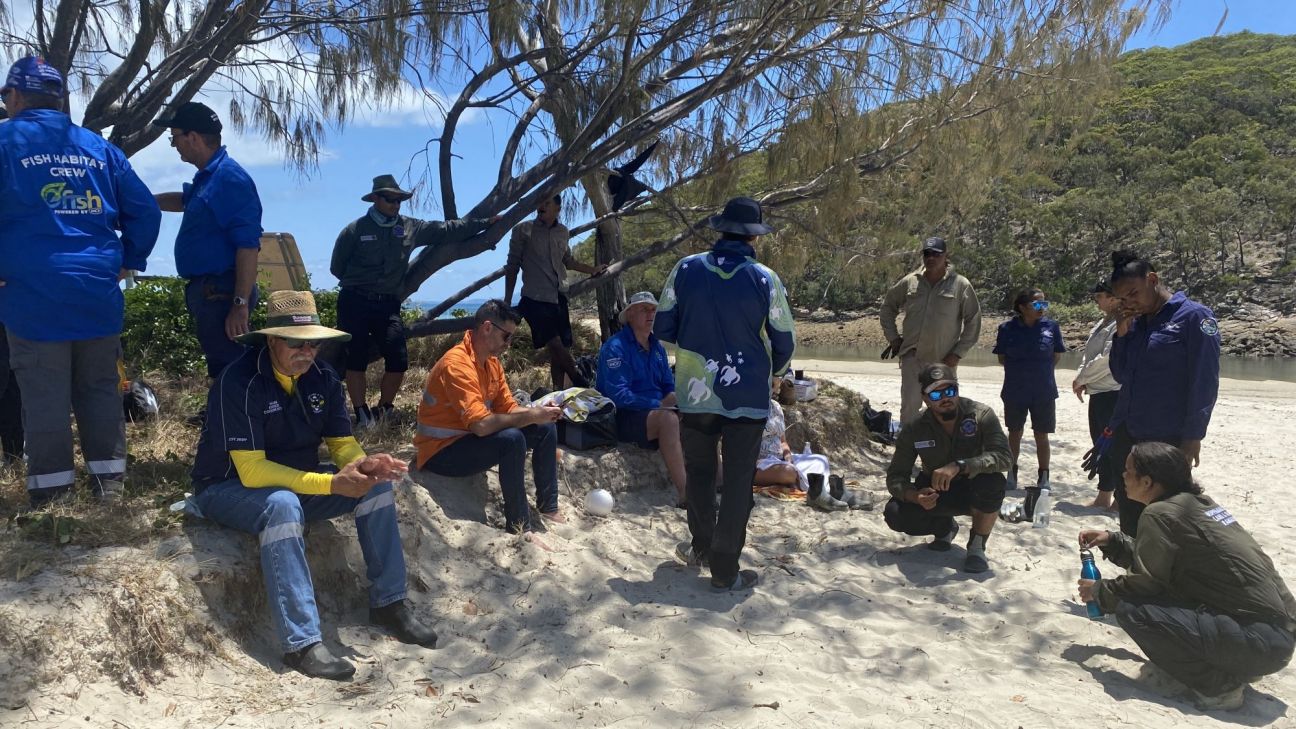
The restoration project was the result of collaboration between government agencies, local councils, and community organisations.
Sonny Van IssumThe value of collaboration
The success of the oyster reef installation on Woppa is a testament to the power of collaboration. This initiative is part of a broader restoration program funded by the Australian Government’s Department of Climate Change, Energy, the Environment and Water.
Ongoing support from Livingstone Shire Council, Queensland Parks and Wildlife Service, and the Department of Natural Resources, Mines, Manufacturing and Regional and Rural Development has been instrumental in bringing this vision to life.
By uniting government agencies, local councils, and community organisations, the project demonstrates how collective efforts can achieve meaningful outcomes for both the environment and cultural heritage.
This partnership approach ensures that the restoration of Woppaburra Land and sea Country is not only sustainable but also deeply rooted in shared responsibility and respect for Country.
Newsletter
Get involved and stay informed with our handpicked environmental news, tips, and stories sent directly to your inbox.