Issued: 24 November 2025
5 mins read
At first glance, it’s easy to mix up a dugong and a manatee. Both are large, gentle “sea cows” that spend their days grazing on underwater plants. They’re members of the same animal order – Sirenia – which includes three species of manatee and just one species of dugong.
But while they may look like cousins, these creatures live in very different parts of the world and have a few tell-tale differences once you know what to look for.
Difference between dugongs and manatees
If you’re swimming, boating, or exploring Queensland’s tropical waters, the only Sirenian you’ll ever see is a dugong – manatees don’t live here!
Besides the obvious geographical clues, some physical differences can help you tell these two species apart. Dugongs have a fluked tail, like a dolphin’s, while manatees have a broad, paddle-shaped tail. A dugong’s snout curves downwards, perfectly designed for grazing seagrass meadows on the seafloor. Manatees, on the other hand, have a more rounded face and a flexible upper lip that they use to grab aquatic plants.
Another giveaway? Some manatee species have small nails on their flippers – dugongs don’t.

Spot the difference – the easiest way to spot the difference between dugongs and manatees is their tails.
Habitats
Dugongs live their whole lives in warm, shallow marine waters, rarely straying far from the coast. In Queensland, they’re found from Moreton Bay in the south all the way up through the Great Barrier Reef and into the Torres Strait and Gulf of Carpentaria – wherever healthy seagrass meadows grow.
These underwater pastures are their main food source, and they spend most of the day grazing – much like cows in a paddock. In Moreton Bay, seagrass meadows have been reduced by coastal development and poor water quality, but ongoing restoration work is helping the local dugong population recover.
Manatees, in contrast, live across the Americas and West Africa, and can be found in freshwater rivers, estuaries, and coastal lagoons as well as the ocean. They’re more adaptable but face similar threats from habitat loss and water pollution.
Conservation status
The dugong is listed as Vulnerable in Queensland and faces multiple threats to its survival. Its greatest challenge is the loss and degradation of seagrass habitat, often caused by poor water quality, coastal development, and extreme weather induced by climate change.
Other risks include boat strikes, entanglement in fishing gear, and marine pollution. Because dugongs reproduce slowly – females have one calf every few years – even small increases in adult deaths can have big impacts on local populations.
To help, Queensland has established Dugong Protection Areas along the coast to limit netting and reduce human impacts in key habitats. These protections, along with ongoing research and seagrass restoration, are vital for keeping dugongs safe in the wild.
The West Indian manatee is listed as Threatened under the U.S. Endangered Species Act, with boat strikes and loss of aquatic vegetation among the leading causes of death. Conservation programs in Florida and the Caribbean are helping their numbers recover, but they remain vulnerable in parts of their range.
Breeding and behaviour
Dugongs are long-lived, with some occasionally reaching 70 years, but they take their time raising their young. Females don’t start breeding until they’re around 10 years old and usually have just one calf at a time. Calves stay close to their mothers for more than a year, nursing and learning where to find the best seagrass beds.
They’re often seen alone or in small groups, though larger gatherings of up to hundreds of individuals can occur in rich feeding grounds. Because they rely so heavily on specific seagrass species, dugongs are especially sensitive to changes in their environment.
Manatees share similar habits but are known to be a bit more social – in some parts of the world, they huddle together in warm springs during cold weather.
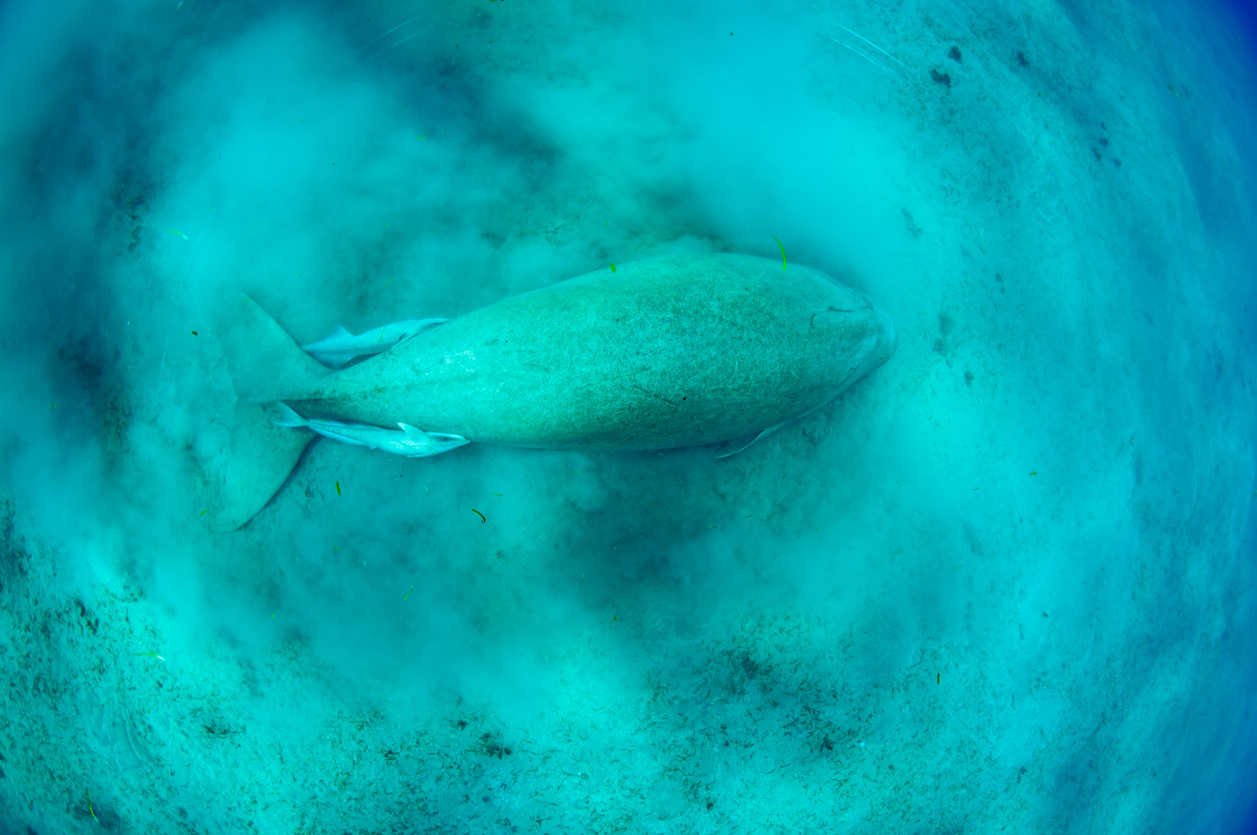
Dugong populations are at risk, but there’s hope to bring them back to healthy levels.
What’s being done to protect dugongs?
The Queensland Government, along with Traditional Owners, scientists and conservation partners, is working to protect dugongs and their habitats.
Projects include:
- Monitoring programs that track dugong numbers through aerial surveys and strandings data.
- Seagrass health assessments, essential for understanding food availability.
- Dugong Protection Areas, which manage fishing and boating activity in critical zones.
- Community education, reminding boaters to slow down and watch for dugongs in shallow water.
- The Dugong Connections project fosters collaboration between Traditional Owners and scientists to protect dugongs and their habitats. It combines Indigenous and Western knowledge through shared dialogue, respectful partnerships, and co-designed conservation activities on the Great Barrier Reef.
You can play a part too! If you’re out on the water, keep a safe distance from marine mammals, avoid disturbing seagrass areas, and report any injured or stranded dugongs to the Queensland Marine Strandings Hotline on 1300 130 372.
A unique Queensland treasure
While manatees might rule the rivers of the Americas, the dugong reigns in Queensland’s tropical seas. These gentle seagrass grazers are a living link to the past – the only surviving relatives of the now-extinct Steller’s sea cow – and a symbol of the rich marine life that makes our coast so special.
Protecting dugongs means protecting the seagrass meadows and clean coastal waters that many species, including turtles, fish, and humans, depend on.
Next time you’re lucky enough to spot a shadow gliding over the seagrass, take a moment to appreciate it. It’s not a manatee – it’s one of Queensland’s most extraordinary locals.
Newsletter
Get involved and stay informed with our handpicked environmental news, tips, and stories sent directly to your inbox.