Issued: 29 July 2025
8 mins read
Across Queensland, a wave of talented women is reshaping how science informs our lives – from protecting the Great Barrier Reef to embedding evidence in government policy, inspiring future generations, and driving bold environmental reform.
These leaders aren’t just making space for science at the table – they’re making sure it’s heard, understood, and acted on. Whether they come from research, regulation, or remote fieldwork, they share a common goal: turning data into decisions that make a real difference.
Meet some of the incredible women leading the charge in the Department of the Environment, Tourism, Science and Innovation, working on all sorts of impactful initiatives for the future of our state.
Professor Kerrie Wilson
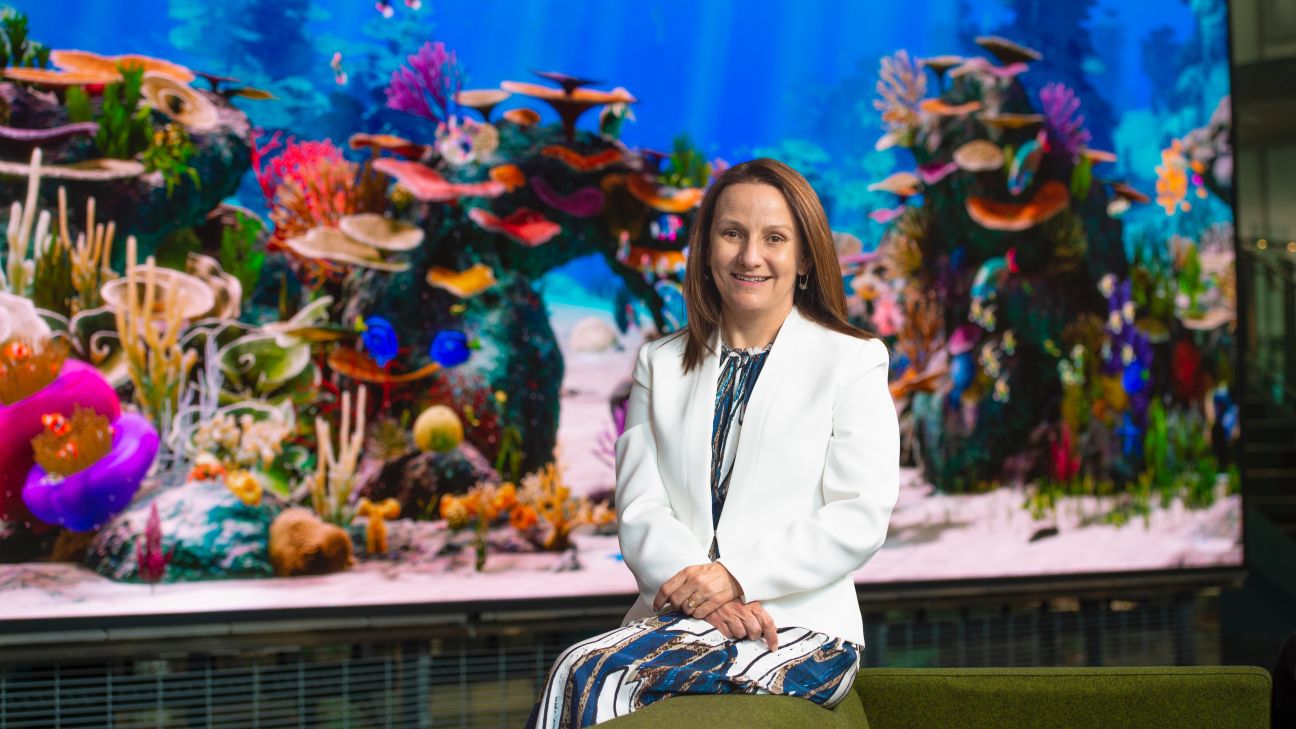
Professor Kerrie Wilson, Queensland Chief Scientist
As Queensland Chief Scientist, Professor Kerrie Wilson is a passionate advocate for the power of science to improve lives, shape policy and protect the planet. With experience across academia, government and the not-for-profit sector, she’s committed to making science accessible, inclusive and meaningful for all.
“Science is already part of people’s daily lives,” Kerrie says. “It makes our jobs safer, our homes more efficient and our environment healthier.” One of her priorities is improving science literacy across Queensland – not just through education but by showing how science connects to the things communities care about most.
She’s particularly focused on creating more opportunities for women and girls in STEM. Through programs like the Queensland Women in STEM Prize, STEM Girl Power and Flying Scientists, Kerrie is helping showcase diverse role models and open pathways across the state. “We have so many brilliant women in science here in Queensland,” she says. “One of the best parts of my role is celebrating and amplifying their work.”
While environmental sciences – her own field – tend to attract more women, Kerrie says broader gender gaps persist, especially in technology and engineering. “The data is clear. We need to create space for girls to engage early and to see themselves in science careers.”
She’s also keen to challenge outdated ideas about what a science career looks like. “There’s no single path,” she says. “Some people come to science later in life or from other industries – and that diversity makes our work better.”
In her downtime, Kerrie still finds inspiration in the natural world. “I love hiking in our National Parks and diving on the Reef. These moments remind me why our research and conservation efforts are so important.”
Trish O’Callaghan

Trish O'Callaghan, Director-General of the Department of the Environment, Tourism, Science and Innovation
As Director-General of Queensland’s Department of the Environment, Tourism, Science and Innovation (DETSI), Trish O’Callaghan is leading a push to embed science into every layer of government decision-making. “Scientific evidence shouldn’t sit on the sidelines – it should shape the core of our strategies,” she says.
With a team of nearly 500 scientists across DETSI, Trish sees her role as enabling their knowledge to drive real-world impact. “It’s about creating the right conditions for people to bring their expertise forward in meaningful ways.”
Trish is particularly passionate about the intersection of science, tourism and innovation – and the role they can play in building sustainable, resilient communities. “Queensland is uniquely placed to lead. Science provides the evidence, innovation helps us scale solutions, and tourism connects people to these ideas.”
She also sees enormous opportunity in strengthening ties between science and the broader economy. “We’re focused on connecting and supporting the science industry with key economic sectors – from resources and agriculture to health and advanced manufacturing – so Queensland can compete globally and thrive locally.”
She’s also a strong advocate for using science to improve government services – from environmental monitoring to behavioural insights and predictive modelling. But, she adds, storytelling is just as important. “When Queenslanders see how science benefits their lives, it builds trust and inspires future generations.”
Coming from a leadership background outside government, Trish brings a fresh perspective to public sector leadership – especially when it comes to inclusion. “Only 19.4% of CEOs in Australia are women. That tells us there is significant opportunity here to improve.”
And while her work spans the state, Trish’s heart is still in Mount Isa where she grew up. “I’ll always be a sunset chaser,” she states. “The Outback sky is magic – it reminds me why this work matters.”
Sian Breen

Sian Breen, Executive Director of Water and Catchments and Science at DETSI
As Executive Director for Water and Catchments and Science at DETSI, Sian Breen leads a team working at the intersection of science, policy and real-world impact. From monitoring water and soil health to shaping major environmental reforms, her mission is clear: use science to drive meaningful change.
“We’re not just generating data – we’re using it to inform decisions that matter,” she says. One of her most significant achievements has been leading the delivery of a $125 million structural adjustment package to phase out gillnet fishing in parts of the Great Barrier Reef – a bold, science-backed reform grounded in deep collaboration with community, industry and First Nations partners.
“It’s not always easy,” Sian acknowledges. “But that’s the role of government science leadership – to translate complex, and sometimes confronting, evidence into action that lasts.”
With a background in aquaculture, fisheries and reef policy, Sian isn’t a technical water scientist – and she sees that as a strength. “My job is to make sure good science is heard where decisions are made. It’s about creating the space for expertise to thrive.”
She’s also passionate about the role women play in science leadership. “We often act as translators – connecting data with people, policy and purpose. Empathy, clarity and courage matter, especially in contested spaces.”
Mentorship is a guiding principle in her work. Whether supporting First Nations-led science in the Torres Strait or helping shape reef water quality science, Sian is focused on building better systems – and paving the way for more women to lead. “Leadership is about legacy,” she says. “Leaving things better than you found them – and lifting others as you go.”
Allison Bambrick
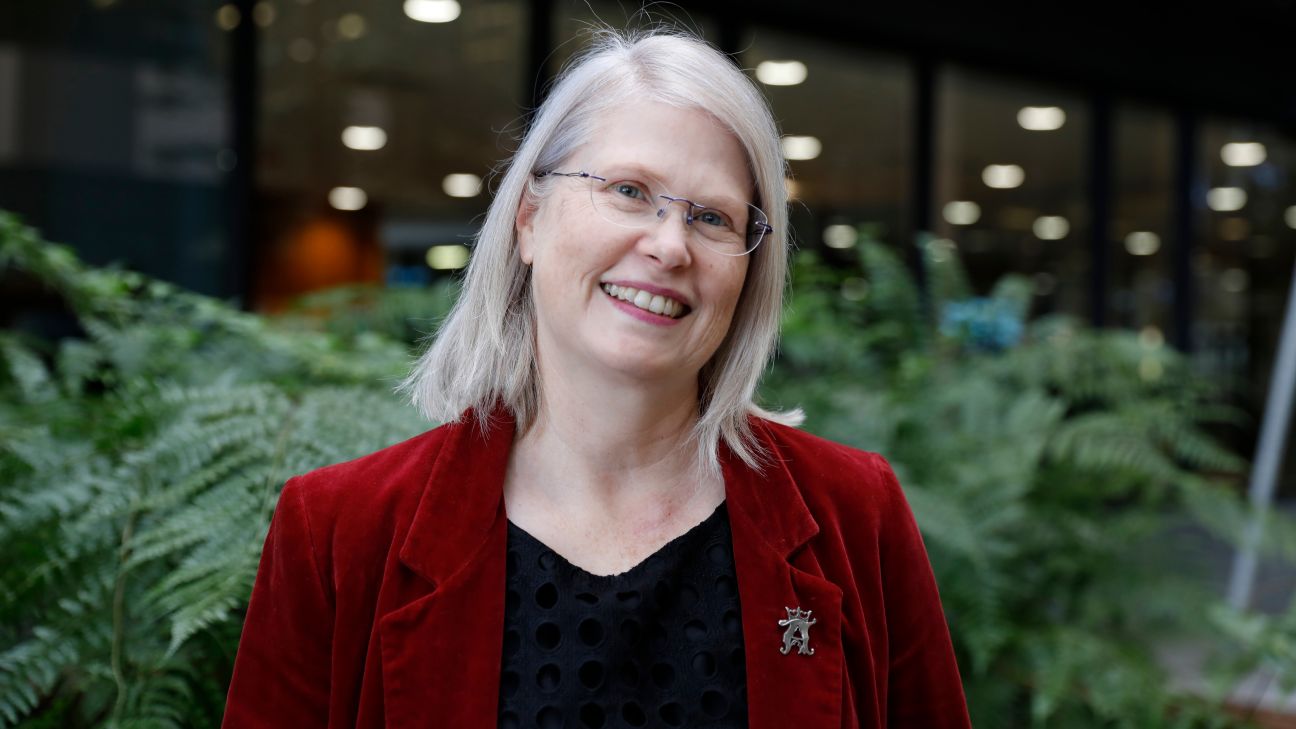
Allison Bambrick, Executive Director, Science Development and Office of the Queensland Chief Scientist
Allison Bambrick is the Executive Director of Science Development and Office of the Queensland Chief Scientist, working closely with the Queensland Chief Scientist to turn bold ideas into practical, real-world programs that support science and innovation across the state.
At the heart of Allison’s work is a drive to make science more accessible, actionable, and impactful. “For science and innovation to truly improve the lives of Queenslanders, government, research and industry have to work together,” she explains. “Each group has its own strengths, challenges and timelines – our role is to bridge that gap.”
In 2023, Allison worked with Professor Kerrie Wilson to bring the Office of the Queensland Chief Scientist and the Science Development unit together under one branch – a move that has helped focus efforts and deliver more strategic, evidence-informed programs. “It means we can better support the Queensland Chief Scientist and deliver programs that genuinely meet stakeholder needs,” she says. “The outcomes are stronger, more sustainable, and more aligned with Queensland’s long-term priorities.”
She’s also excited about the future, especially in areas like quantum technology. A passionate supporter of Queensland’s work in quantum and advanced technologies, and of the Quantum 2032 Challenge program, Allison points to the development of portable brain imaging tools as a world-leading application. “There’s no definitive test for concussion right now,” she says. “But a Queensland-led project is developing quantum magnetic sensors that could lead to brain imaging helmets – something lightweight enough to use on the sidelines of a sports match. That could be a game-changer for both elite athletes and everyday communities.”
A strong advocate for inclusive leadership, Allison encourages emerging women in science policy to take initiative and be clear about their goals. “Talk to people about their work. Figure out where you thrive – and then apply,” she advises. “Don’t wait to be discovered. Put yourself forward.”
And, when asked what outlandish invention she’d like to see become reality overnight, “I’d love to communicate with animals,” she says. “To calm wild creatures, to understand what they know, how they live – and hopefully use that knowledge to treat them, and the natural world, with more respect.”
Dr Gillian Brown
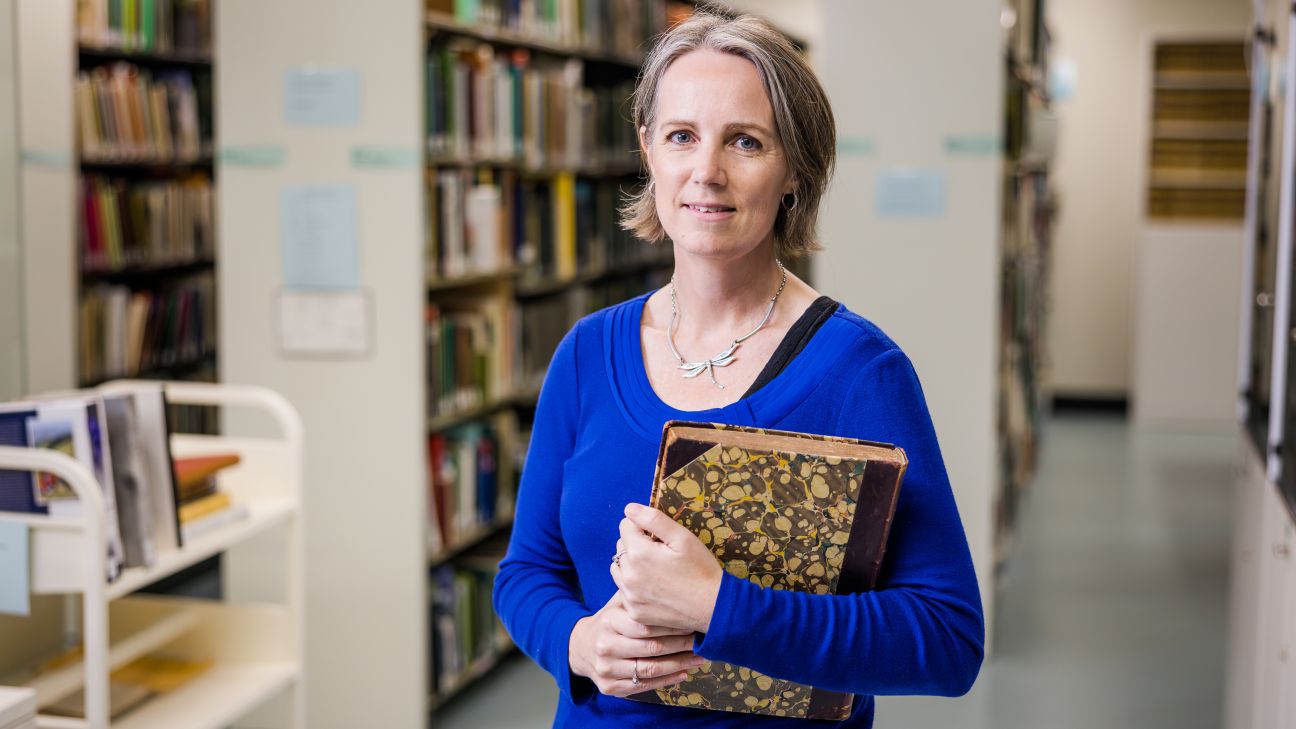
Dr Gillian Brown, Director of the Queensland Herbarium
In 2022, Dr Gillian Brown made history as the first woman to lead the Queensland Herbarium since its founding in 1855. Now Director of the state’s world-renowned plant science facility, Gillian oversees more than 920,000 preserved plant, fungi and algae specimens – a living library of Queensland’s biodiversity and a powerful tool for conservation and land management.
“We’re not just storing plants – we’re documenting them through space and time,” she says. “Every specimen tells a story and together, they form a scientific record that helps us understand change and plan for the future.” The specimens range from plants collected by Joseph Banks in 1770 through to roadside discoveries made just days ago. Under Gillian’s leadership, the Herbarium is digitising the entire collection, opening access to researchers and nature lovers around the world through virtual tours and citizen science.
A respected botanist, Gillian made her own mark on the field in 2021 when she discovered a new genus found only in Queensland: Heliodendron, meaning “sun tree”. It’s just one example of the remarkable research flowing from the Herbarium – from mapping Queensland’s 1,435 regional ecosystems to supporting cutting-edge wetland monitoring and biosecurity efforts.
While the Herbarium is steeped in tradition, Gillian and her team are future focused, embracing technologies like genome sequencing, modelling, machine learning, and remote sensing to better monitor changes in species and habitats and support biodiversity management. “Collections-based science is more vital than ever,” she says. “It connects us with the past, but it also enables the innovations we need to meet today’s environmental challenges.”
Through it all, Gillian remains driven by curiosity, collaboration, and the joy of discovery. “There is so much biodiversity out there, including a lot we don’t know – it's important we continue to do this work and excite the next generation to continue to care for this amazing country of ours.”
Newsletter
Get involved and stay informed with our handpicked environmental news, tips, and stories sent directly to your inbox.