We may be slightly biased, but we reckon Queensland is easily one of the greatest places on Earth. Most people know our wildlife is cute (and weird and sometimes scary) and our natural landscapes are as stunning as they are diverse – but there is more to our state than impressive visuals. Queensland is filled with rarities that can’t be found anywhere else on the planet, and we thought it was high time to shed some light on these brag-worthy things you might not know about.
Here are 9 fast Queensland facts that showcase the most unique aspects of our natural environment – and at least a handful of them are bound to surprise even the most knowledgeable Sunshine State residents.

1. Our rainforest is older than the Amazon
Amazon, who? The Daintree Rainforest (Cape York Peninsula Aboriginal Land) in Tropical Far North Queensland is around 180 million years old, making it the world’s oldest tropical rainforest. The Daintree is kind of like a time capsule from when the supercontinent Pangaea was still breaking apart. As the land split into Gondwana and Laurasia, the ancestors of today’s ferns, cycads, and conifers thrived in what would become Australia – so the Daintree is technically filled with living relics.

2. We’re the most biodiverse state in Australia
Queensland boasts the highest biodiversity in the country – it’s home to 85% of Australia’s mammals, 72% of birds, just over 50% of reptiles and frogs, plus more than 14,000 plant species. Many of the species here are unique to our state – so Queensland’s diversity of life is a serious flex. In addition to this, Australia is one of only 17 megadiverse countries in the world – with many plant and animal species found nowhere else on earth.

Photo credit: Image ISS045-E-56257 courtesy of the Earth Science and Remote Sensing Unit, NASA Johnson Space Centre.
3. The Great Barrier Reef is visible from space
At 2,300 km long, the Great Barrier Reef is the largest living structure on Earth – so big that astronauts can see it from orbit. It’s made up of around 3,000 individual reefs and supports thousands of species, from tiny coral polyps to huge humpback whales. Reefs are easy to spot from space thanks to their high-contrast colour scheme – the dark blues of deep water next to the light and shimmering tones of shallow lagoons are a sure giveaway.

4. Queensland is home to the world’s largest sand island
K’gari is the largest sand island on the planet, stretching an incredible 123 km long and clocking in at a whopping 166,038 ha. This World Heritage Area boasts some fascinating natural features – and when you learn the science behind how lakes and forests can be created on bare sand, the whole island’s existence seems that much more miraculous.

5. Queensland has a “living fossil” fish that can breathe out of water
It’s always a bit surreal to encounter animals that have remained virtually unchanged for hundreds of millions of years – and the Australian lungfish is an example of one such creature. Found in south-east Queensland rivers, this curious specimen has a single lung that allows it to surface and breathe air.

6. Some of our ecosystems need fire to thrive
It might sound counterintuitive, but fire plays a key role in many of Queensland’s natural landscapes. Native plants like banksias and eucalypts have evolved to survive – and even depend on – regular, low-intensity bushfires. In Queensland, planned burns are a fire management tool used to stop vegetation fires from getting out of control – it’s all about striking a balance between harm reduction and respecting natural processes.

7. Queensland is the only place on Earth where two World Heritage sites meet
Looking for a two-for-one bucket list experience? There’s only one spot in the world where two World Heritage-listed ecosystems touch: Queensland’s Wet Tropics rainforest and the Great Barrier Reef, which meet at the picture-perfect Cape Tribulation. This globally rare overlap of land and sea biodiversity is further proof that Queensland’s natural landscapes are truly unique.
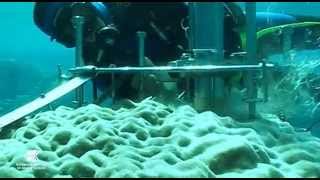
8. Our corals hold natural climate records
Did you know that coral cores from the Great Barrier Reef preserve climate data going back several centuries? Scientists from the Australian Institute of Marine Science (AIMS) have a collection of specimens that reveals fascinating insights into historical coral growth rates and climate impacts. The coral cores help AIMS researchers understand not only past climate conditions, but also inform modelling for future climates.
Extra fun fact: Certain massive coral skeletons contain annual density bands that are visible when the coral is X-rayed, much like the rings of a tree!

9. You can see bioluminescence in action
Ever seen a movie or TV show where crashing ocean waves glow at night like some kind of fairytale? That’s bioluminescence, baby – and you can witness it with your own eyes at some special Queensland spots. Tiny bioluminescent plankton emit a magical glow when disturbed, creating a rare and beautiful phenomenon that’s well worth trying to see. While it’s not super common in Queensland waters, there are still occasional instances – recent examples include in Moreton Bay and the Brisbane River.
Looking for a sure bet? While it may not be the same as swishing through glowing water, you can see bioluminescent activity in the form of glow-worms in Springbrook National Park.
Tags
Related posts
-
![Aerial view of the famous Whitsunday Islands, in the Great Barrier Reef]()
Discover Queensland’s 5 World Heritage Areas
Thanks to their ‘outstanding universal value’, 5 special spots in Queensland are on UNESCO's World Heritage List.
- Issued3 February 2025
- Read time8 min read
-
![A greenish-blue orb of algae surrounded by green moss and white coral on the sea floor.]()
From mermaid wineglasses to sea grapes – meet the Great Barrier Reef plants
The plants in the Great Barrier Reef don’t just look cool – they play a vital role in keeping the ecosystem running! We’ve highlighted some…
- Issued29 October 2024
- Read time8 min read
-
![Photo of sprawling view of spiky white coral underwater that has been affected by coral bleaching]()
What is coral bleaching and how does it affect the Great Barrier Reef?
You’ve heard about it in the news, but what is coral bleaching and how does it happen? We step you through the facts about this…
- Issued18 November 2024
- Read time9 min read


